10 WhatsApp Bulk Message Sender Tools to Compare Before You Choose
You are comparing WhatsApp bulk sender tools, and the options all blur together after the first few vendor pages. Picking wrong means wasted setup time, broken broadcasts, or a suspended number at the worst moment. This guide cuts through that noise with ten concrete tools, ranked by what actually matters for your use case.
By the end, you will know the exact criteria to judge any bulk sender, see how the top ten stack up against those criteria, and get a clear #1 pick in Com.bot. You will also walk away with a practical framework for choosing between the remaining nine based on your team size, channel needs, and budget constraints.
What to Look For in a WhatsApp Bulk Message Sender
Choosing the right WhatsApp bulk message sender hinges on a few non-negotiable features that directly impact deliverability, compliance, and campaign success. The most critical factor is official WhatsApp Business API integration. Tools that rely on unofficial APIs or automation tricks on WhatsApp Web risk getting your number banned quickly.
Legitimate platforms require template approval before sending. WhatsApp pre-approves message templates to ensure they meet quality standards, and a proper tool manages this submission process for you. Without this workflow, your messages simply will not go through.
Opt-in consent management is another must-have feature. GDPR compliance demands that you only contact users who explicitly agreed to receive messages, and the right tool tracks and stores that consent properly. This protects your brand reputation and keeps you legally safe.
Look for platforms that offer:
- Delivery rate and click-through rate tracking so you know what actually works
- A clear analytics dashboard for campaign performance at a glance
- Multi-device support so your team can manage campaigns together
- Scheduling to send messages at optimal times automatically
- Personalization using contact fields like names and purchase history
- Media attachments for images, PDFs, and product catalogs
- CSV import for easy contact management and list building
CRM integration separates basic senders from serious marketing tools. When your WhatsApp campaigns sync with your customer database, you can segment audiences and trigger automated journeys. Drip campaigns and A/B testing let you refine messaging over time without manual effort.
Technical safeguards matter just as much as marketing features. API rate limits prevent you from overwhelming the system, while phone number validation removes invalid contacts before they hurt your sender reputation. A message queue ensures smooth delivery even during peak volumes.
Finally, verify that the tool supports end-to-end encryption for all communications. This protects customer data and aligns with privacy expectations. These features separate legitimate tools from risky ones, so compare every platform against this checklist before committing your WhatsApp marketing budget.
1. Com.bot - Best Overall
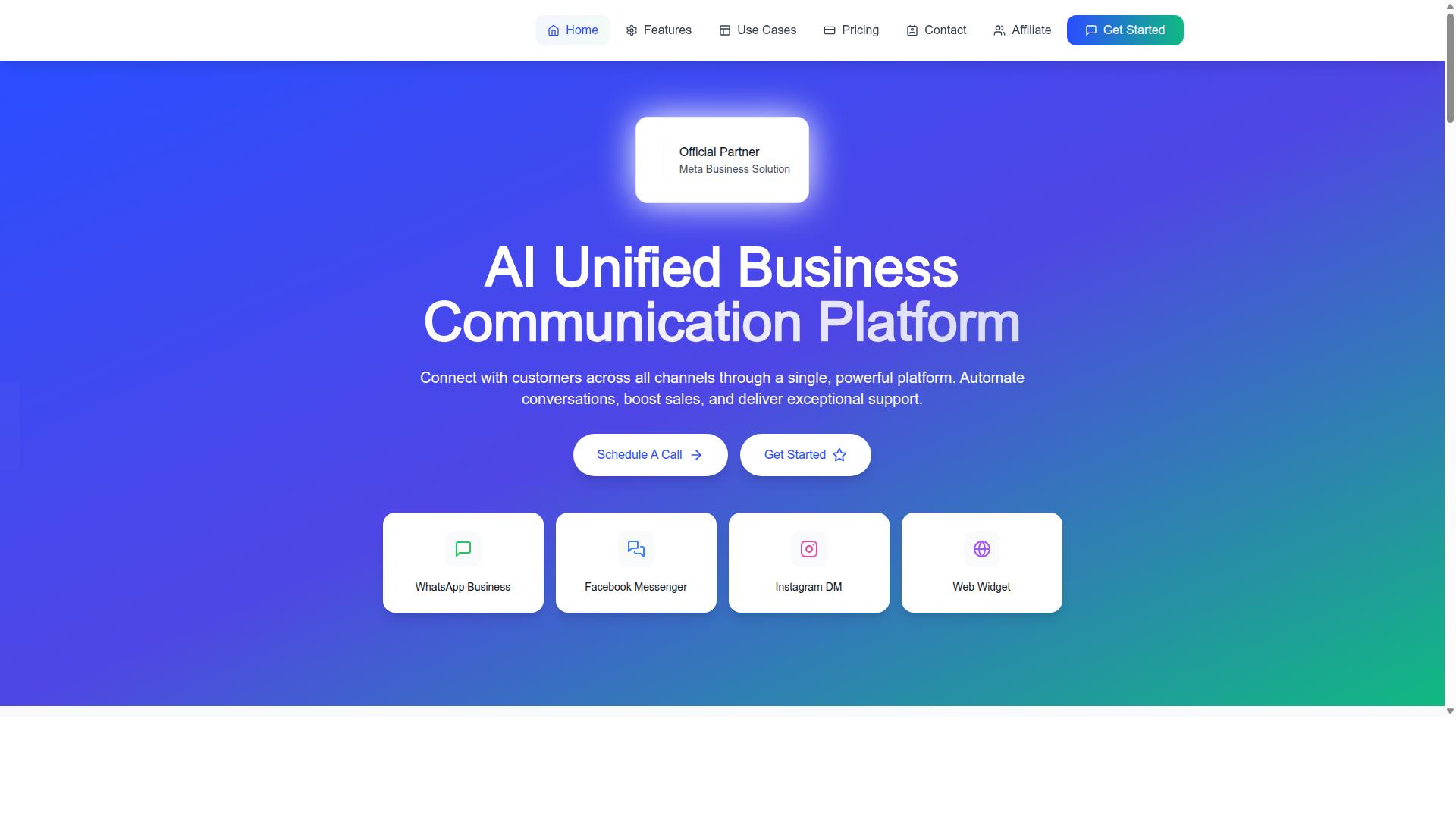
Com.bot stands out as the best overall WhatsApp bulk message sender because it combines official Meta partnership with a unified multi-channel platform that scales from SMBs to enterprises. This is not another unofficial tool that risks your account. It is a serious business communication platform built for reliability, reach, and compliance.
The platform connects customers across WhatsApp Business, Facebook Messenger, Instagram DM, and Web Widget through a single inbox. That means your bulk messaging strategy is not siloed. You manage every conversation, campaign, and customer interaction from one place, which saves hours of switching between apps.
Credibility here is not vague. Com.bot serves 23,000+ active customers and processes 25M+ messages daily. Those numbers reflect real-world usage, not marketing promises. When you choose a bulk message sender, you want proof that it handles serious volume without breaking down.
For businesses comparing WhatsApp bulk message sender tools, the decision often comes down to safety and scale. Com.bot delivers on both fronts, which is why it earns the top spot in this roundup.
Official Meta Partner with Multi-Channel Bulk Reach
Com.bot's official Meta Business Partner badge ensures your bulk messages ride on the compliant WhatsApp Business API, not risky unofficial routes. This is a critical distinction. Unofficial APIs can trigger bans and ruin your sender reputation overnight.
The official partnership supports smoother template approval and higher delivery rates. Your message templates get reviewed through proper channels, which reduces the frustration of rejected campaigns. It also mitigates ban risk, so your WhatsApp Business account stays safe while you scale your outreach.
Multi-channel support is where Com.bot truly shines. You get WhatsApp, Facebook, and Instagram through a single inbox, plus a visual bot builder that makes message automation accessible. You do not need a developer to create effective automated flows. The platform also supports 100K+ bots created, which shows how actively businesses use this feature.
Enterprise security is built in with end-to-end encryption. For businesses handling sensitive customer data, this matters. Com.bot also works with 100+ government bodies and 500+ global partners, demonstrating trust across demanding sectors.
Pricing is structured in three tiers: Silver, Gold, and Platinum. Each plan scales with your messaging volume and feature needs. The focus stays on delivering real-time message delivery with no markup on WhatsApp conversations, so your costs remain predictable as you grow.
When comparing bulk message senders, look for one that removes the fear of account bans. Com.bot's official status, combined with its multi-channel automation and enterprise-grade security, makes it the safest and most capable choice on this list.
2. WATI
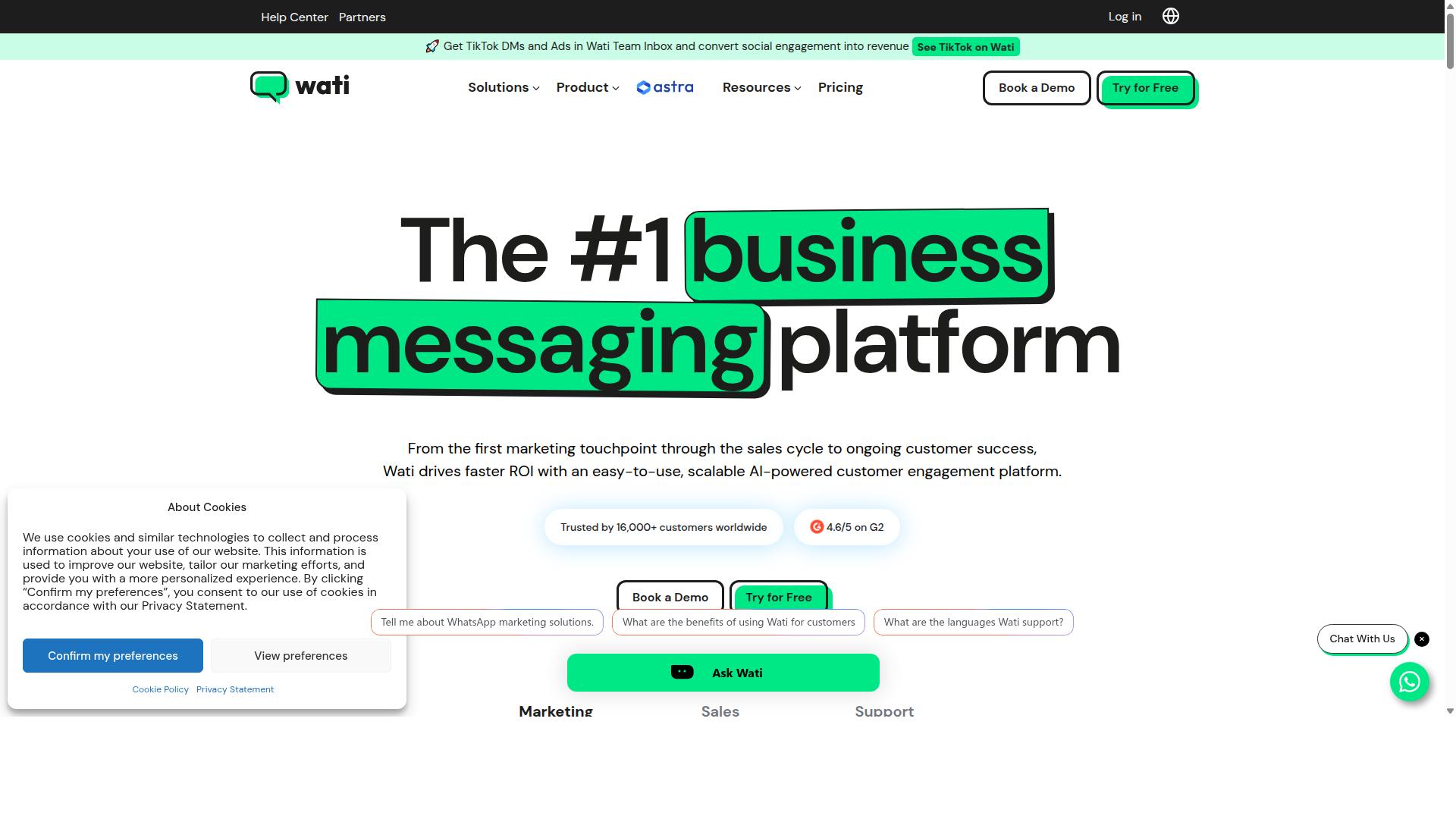
WATI is a solid contender for small to mid-sized teams needing a straightforward WhatsApp Business API solution with a shared team inbox. The platform is built around making WhatsApp marketing and customer support accessible without requiring deep technical knowledge.
Its no-code builder lets you create chat flows and simple automations visually, which is a strong fit for teams that want to move fast. The shared team inbox centralizes conversations so multiple agents can handle incoming messages without stepping on each other's toes.
WATI supports broadcasting messages to large contact lists and scheduling campaigns ahead of time. You can personalize messages using templates that stay compliant with WhatsApp policies, which helps reduce the risk of getting flagged for spam prevention violations.
Pricing starts at $59 per month, which makes it an affordable entry point for smaller operations. That price point is attractive when you compare it to enterprise-grade tools that often require annual contracts and steeper commitments.
However, there are limitations worth noting before you commit. Advanced analytics are thinner here than on some competing platforms, so deep reporting on click-through rate or delivery rate may require workarounds. Multi-channel support is also limited, meaning WATI is best if WhatsApp is your primary focus rather than one channel among many.
Another practical consideration is support. The pro plan includes email support, but response times can be slow based on user feedback. If you run time-sensitive campaigns, that delay could matter when you need template approval or help with message queue issues.
WATI also integrates with Facebook and Instagram lead funnels, which is useful for businesses already running ads on those platforms. CSV import for contact management is straightforward, and the platform handles message scheduling well for drip campaigns and broadcast lists.
For teams that want a simple, reliable bulk message sender without overcomplicating the stack, WATI delivers on the basics. Just be clear about your analytics needs and support expectations before you scale your WhatsApp marketing efforts on it.
3. Brevo
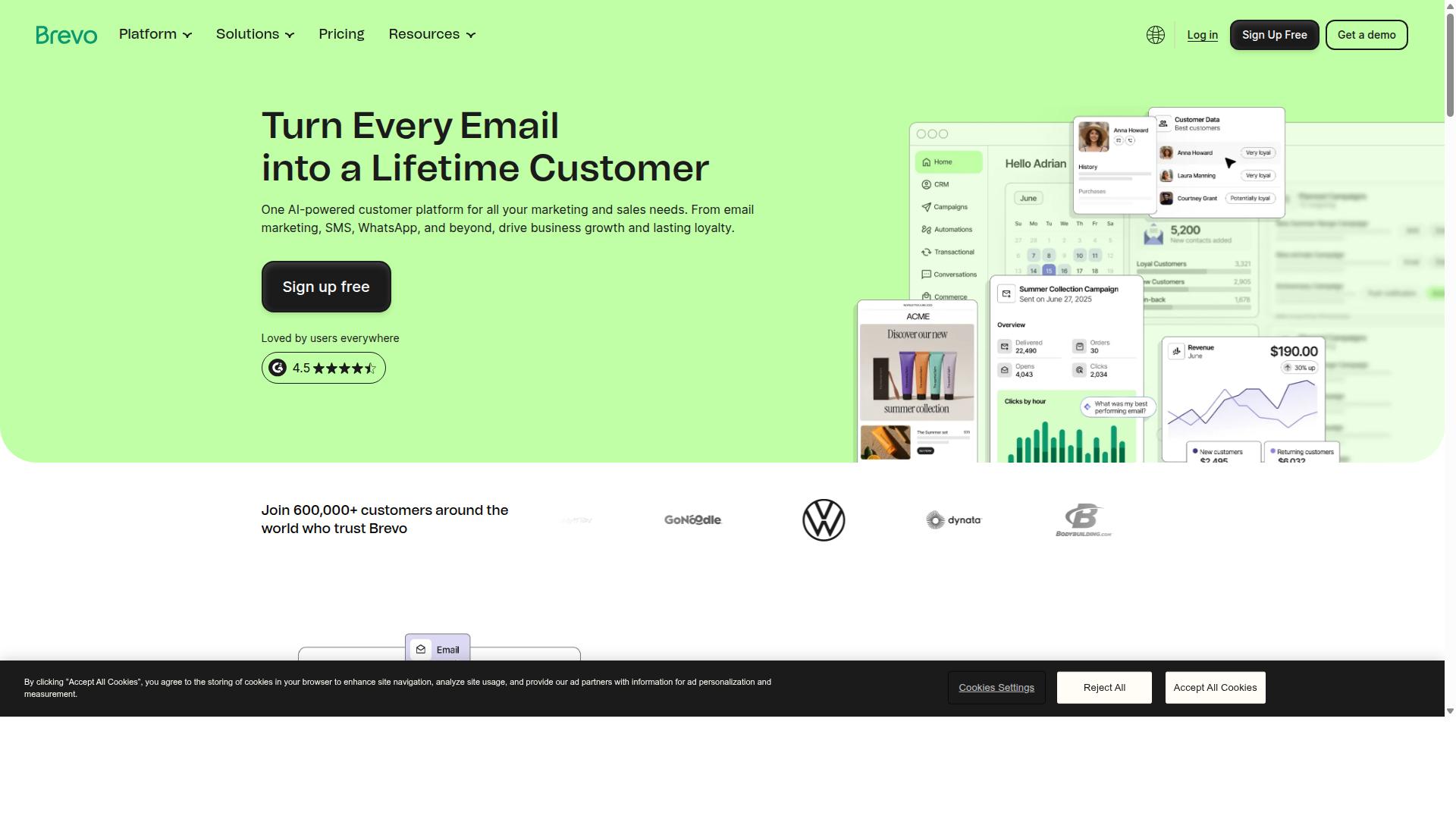
Brevo (formerly Sendinblue) brings a familiar email marketing interface to WhatsApp, making it a good fit for teams already using their CRM. As an official Meta Business Partner and WhatsApp Business Solution Provider, Brevo offers a credible path into WhatsApp marketing without needing a separate platform.
The platform lets you create and send WhatsApp campaigns, manage contact lists, and use message templates without writing code. You can also build interactive messages with quick reply buttons, which helps drive engagement beyond simple text broadcasts.
Brevo shines when you want to connect WhatsApp to your broader marketing efforts. Its multichannel automation flows combine email, SMS, and WhatsApp in a single journey, so a contact can move from a welcome email to a WhatsApp follow-up automatically. That level of CRM integration is a major advantage for teams that already rely on Brevo for daily communication.
The dashboard is user-friendly, and segmentation tools let you target specific groups based on contact properties and past behavior. For bulk messaging, you can schedule campaigns, personalize messages, and track performance without jumping between different tools.
That said, WhatsApp is just one of many channels Brevo supports. Dedicated WhatsApp bulk message sender tools often offer deeper functionality in areas like advanced analytics, complex broadcast lists, or granular delivery reporting. If WhatsApp is your primary channel, a specialized tool may give you more control and precision.
Brevo also offers a free plan and pay-per-message pricing, which makes it approachable for smaller teams. However, businesses running high-volume campaigns should check whether the pricing model scales efficiently as message volume grows.
4. Twilio
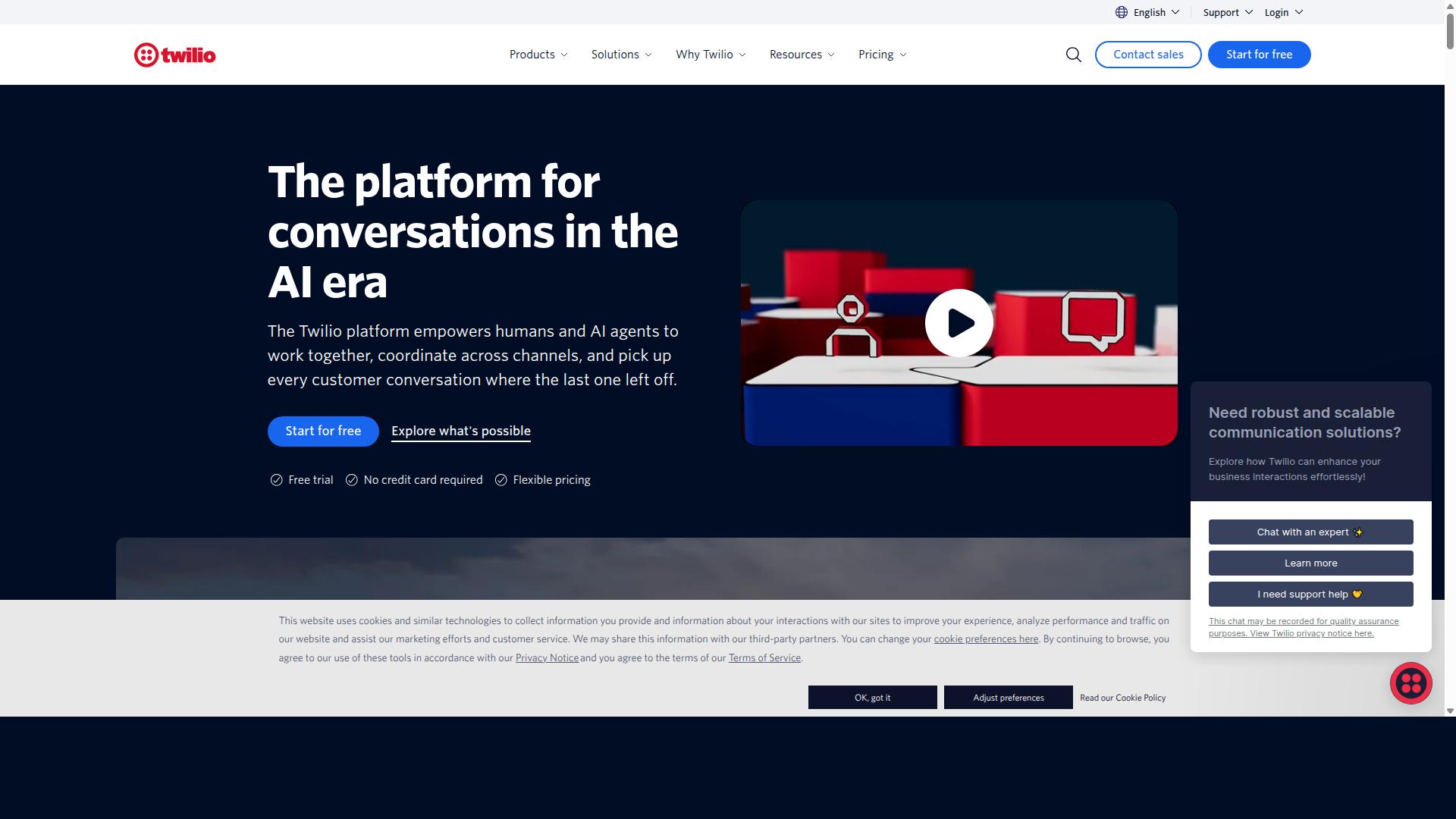
Twilio is the developer's choice, offering raw API access to WhatsApp for custom-built bulk messaging solutions. It positions itself as a WhatsApp Business API provider best suited for small and mid-sized businesses, as well as developer teams building custom messaging workflows.
This platform shines when you need granular control over message queues, API rate limits, and phone number validation. If your team has engineering resources, Twilio gives you the flexibility to build exactly the bulk messaging system your business needs.
Twilio provides official API access and supports CRM integration, which makes it a strong fit for companies already running technical operations. Pricing starts from $0.005 per message, and a free plan is available for teams that want to experiment before committing.
However, there are important trade-offs to consider. Twilio lacks a ready-made user interface for non-technical users, which means you will need coding skills to manage campaigns effectively.
Development costs can add up quickly. Building message templates, handling template approval, and managing contact lists all require custom code, so factor in engineering time when comparing this bulk message sender against more turnkey options.
For teams that need deep customization and have the technical staff to support it, Twilio is a credible option. For marketers or small business owners without a developer on hand, a dedicated WhatsApp marketing platform with a visual interface will likely deliver faster results.
5. Bird (formerly MessageBird)
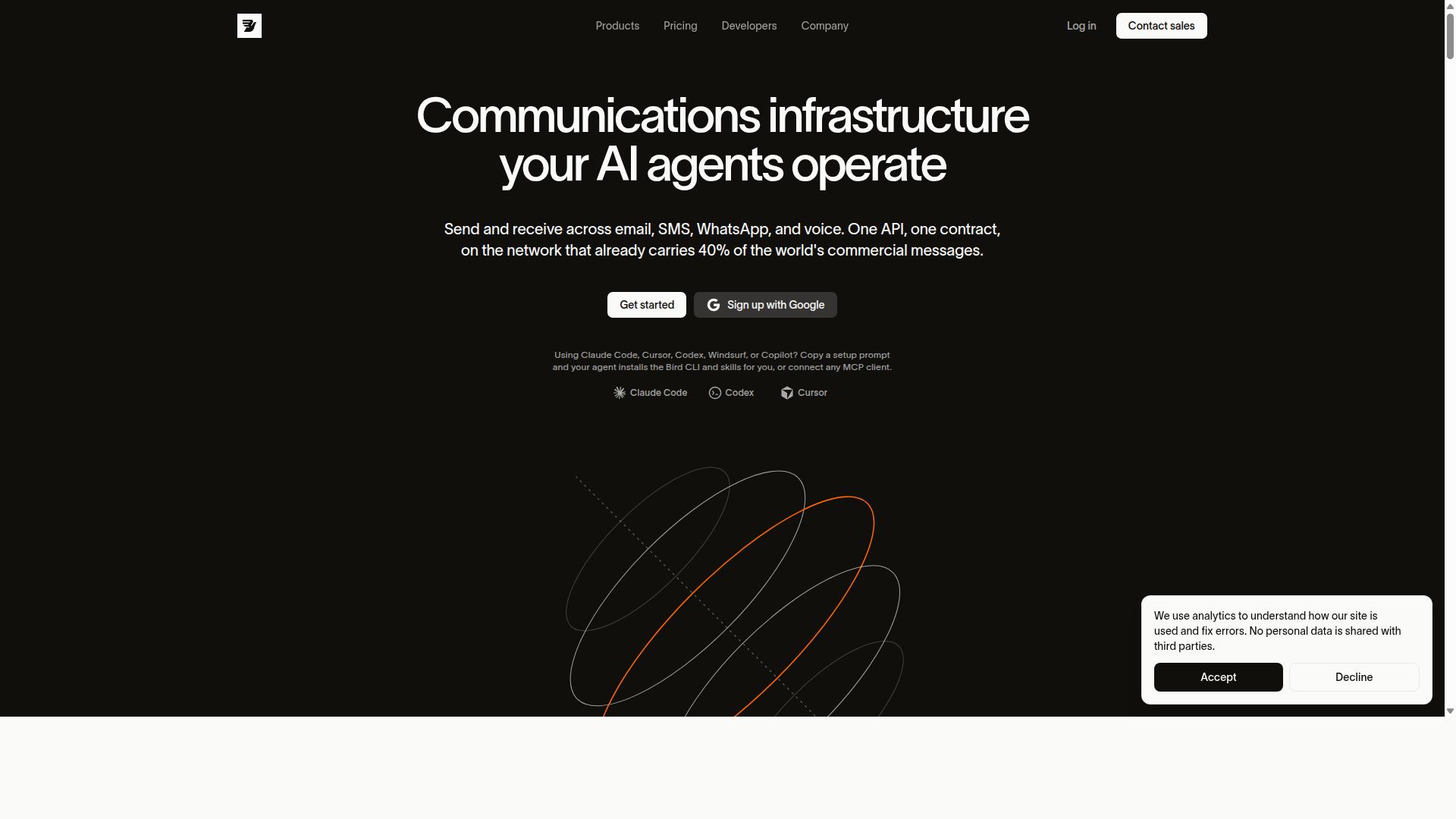
Bird (formerly MessageBird) positions itself as an omnichannel platform with strong global reach, including WhatsApp, SMS, and voice. For businesses running international campaigns, this breadth matters. The platform is built to handle large-scale, cross-border messaging without requiring you to piece together multiple vendors.
Bird is a WhatsApp Business API provider best suited for developers, technical teams, and large enterprises managing global customer communications. It offers official API access and CRM integration, which makes it a solid choice for companies that already have a technical stack in place. The platform supports message templates, contact management, and delivery tracking across channels.
Pricing starts from $0.005 per message, which can be attractive for high-volume senders. However, the overall cost structure can become complex once you factor in per-channel fees, template costs, and regional variations. Budget-conscious teams should map out their expected volumes carefully before committing.
Bird also offers no-code options for less technical users, though the platform clearly leans toward API-first workflows. Support quality varies by region, so enterprises with a global footprint should verify local responsiveness. For large-scale, global messaging needs, Bird is a credible contender, but it demands more setup effort than simpler bulk messaging tools.
6. AiSensy
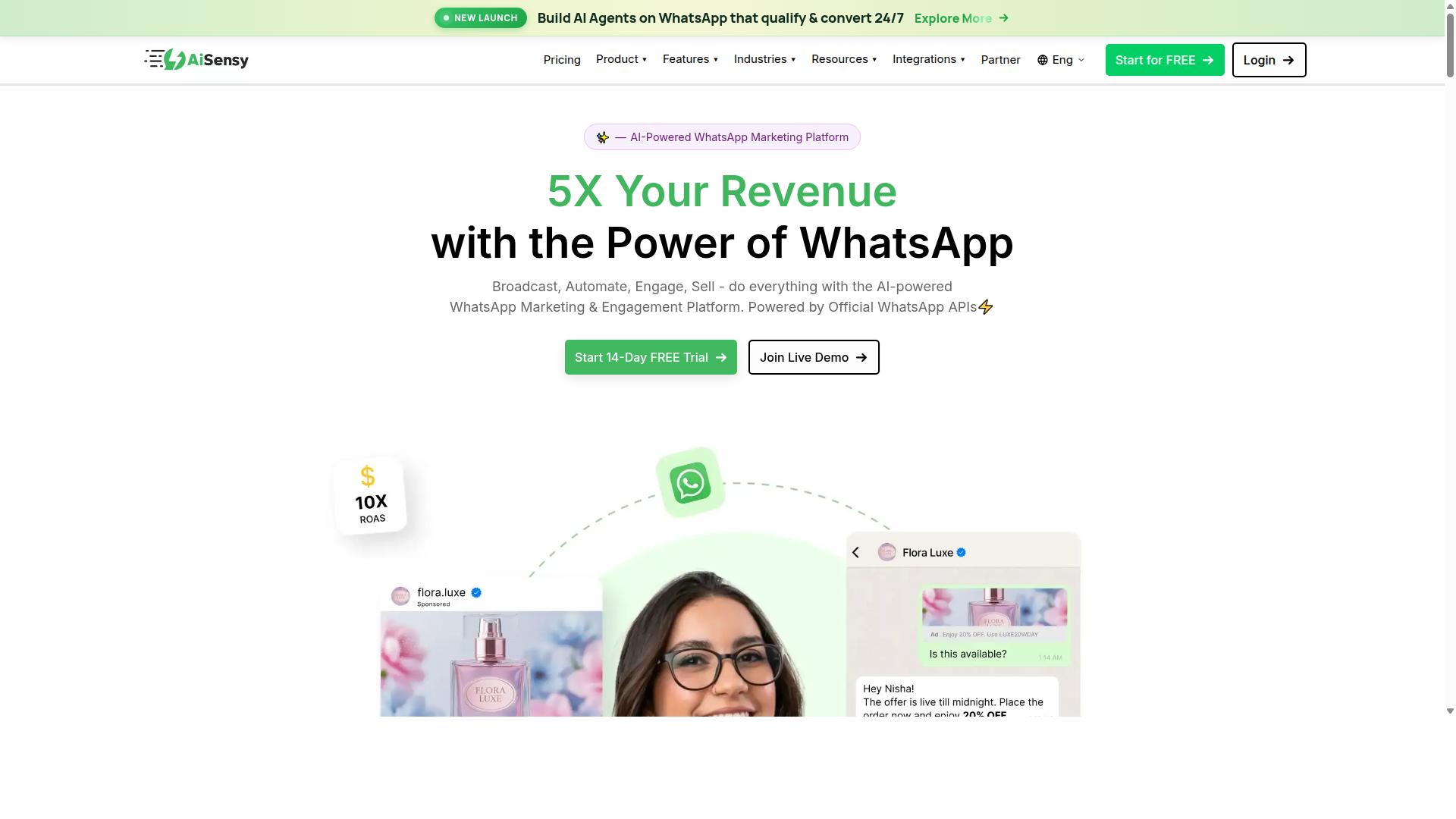
AiSensy targets small businesses with a simple, affordable WhatsApp bulk sender that includes basic automation and broadcast features. It is positioned as a budget-conscious option for companies running frequent B2C campaigns without needing a complex tech stack.
The platform supports blasts, reminders, and simple follow-up flows. That makes it a reasonable fit for shops, local services, and startups that want to reach customers quickly through WhatsApp bulk messaging.
Setup is straightforward, which appeals to teams without dedicated marketing technologists. You can get a campaign running with minimal training, and the pricing is generally considered accessible for smaller budgets.
That said, AiSensy has some limits worth noting. Advanced customization options are thinner than what larger platforms offer, and multi-channel support is not a core strength.
CRM integration is also limited, so teams with complex customer data workflows may feel constrained. If your operation relies on deep contact segmentation or omnichannel journeys, this tool might feel restrictive.
For basic broadcast lists and simple drip campaigns, however, AiSensy delivers solid value. It is a practical entry point for businesses stepping into WhatsApp marketing for the first time.
Just keep expectations realistic. The analytics dashboard covers essentials, but it does not dig as deep as enterprise-grade reporting tools. Research suggests that teams pairing simple tools with clear campaign goals get the most value from this kind of platform.
7. NovoChat
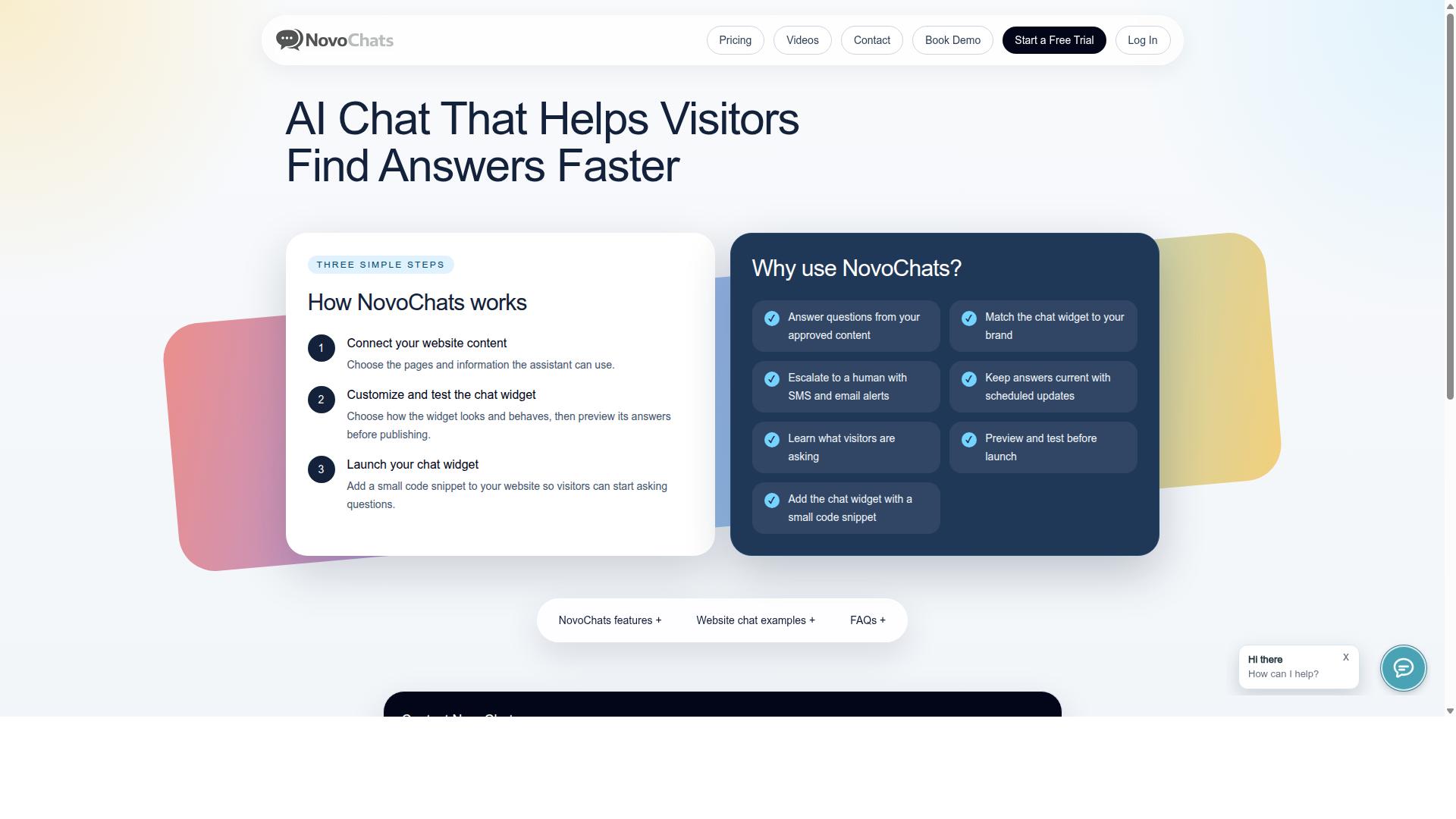
NovoChat focuses on team collaboration and automation, making it a practical choice for customer support teams using WhatsApp. Its shared team inbox keeps every conversation in one place, so agents can see what their colleagues have already handled.
The platform includes assignment rules that route incoming messages to the right person or department automatically. This reduces confusion and helps support teams respond faster without manually sorting through a cluttered inbox.
NovoChat also offers a chatbot builder for handling common questions and simple workflows. You can set up automated replies for frequently asked questions, which frees up your team to focus on more complex customer issues.
For ecommerce businesses, NovoChat is particularly well-suited since it integrates naturally with Shopify and other online store platforms. It's a solid fit if your priority is cart recovery and store-related customer conversations.
That said, advanced marketing features may be limited. If you need deep A/B testing or sophisticated campaign segmentation, you might find the tool less flexible on the marketing side. It shines in support scenarios, but it's not necessarily built as a full-scale bulk messaging powerhouse.
Pricing starts from $25 per month, and a free trial is available. For teams that value collaboration and quick response times over complex marketing automation, NovoChat is worth a close look.
8. Respond.io
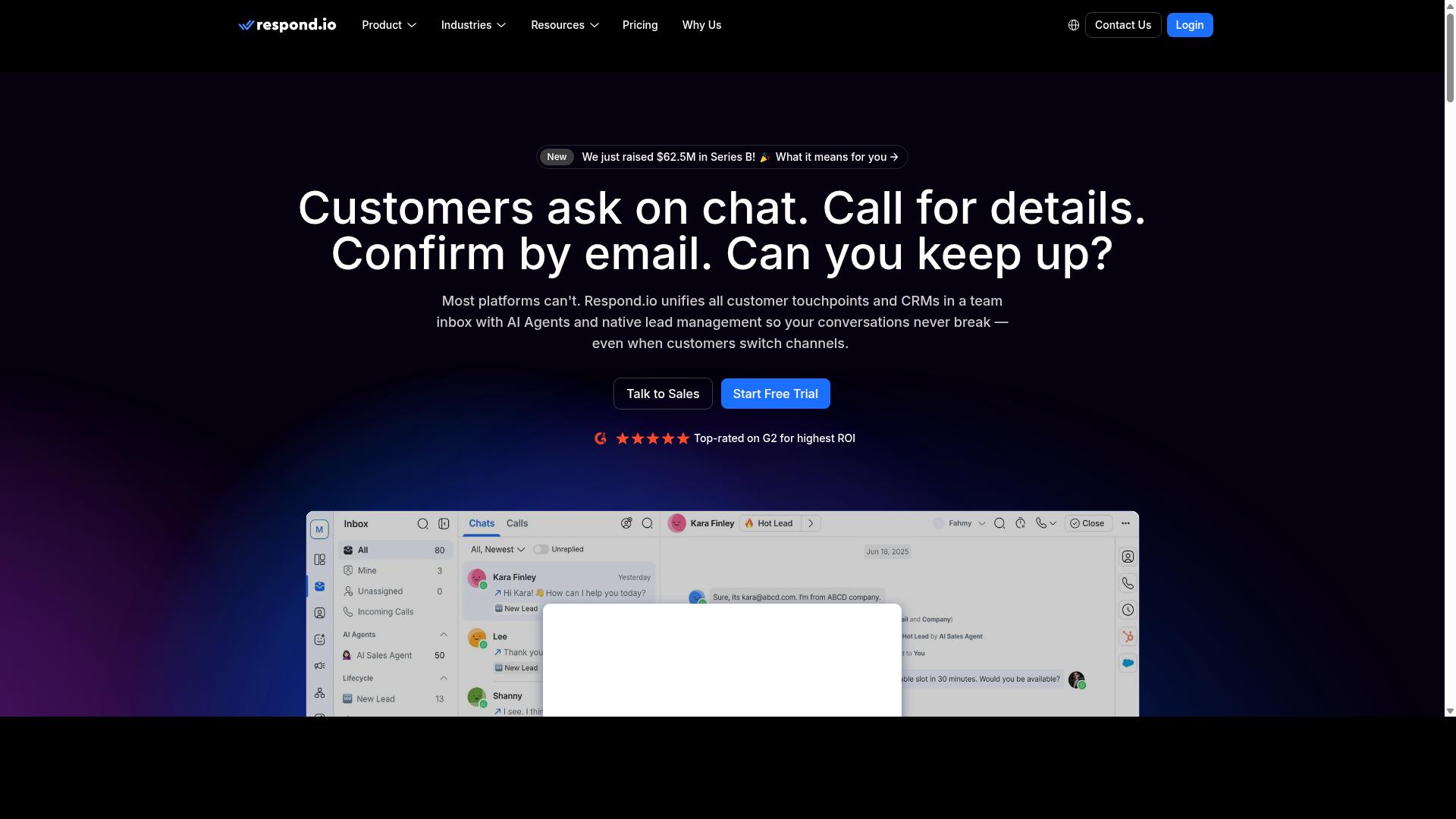
Respond.io excels as an omnichannel inbox that unifies WhatsApp with other messaging apps, ideal for large support teams. It is built for high-volume, multi-channel customer conversations that drive revenue workflows, making it a strong fit for B2C marketing and support teams.
The platform centralizes multi-agent replies, which helps teams manage incoming messages without juggling separate tabs. It also automates lead qualification, so conversations that start as simple inquiries can move through your funnel with less manual effort.
For businesses considering a bulk message sender, Respond.io offers solid CRM integration and workflow automation. Its strength lies in routing conversations and keeping context intact across channels, which matters when agents handle hundreds of daily interactions.
Pricing starts at $79 per month, positioning it for small and mid-sized businesses. That said, the platform may be overkill for simple bulk campaigns where your main goal is sending broadcasts to a list rather than managing a full support operation.
If your team already runs a mature support desk and needs WhatsApp as one channel among many, Respond.io deserves attention. If you only need occasional bulk messaging with minimal setup, a simpler tool will likely serve you better at a lower cost.
9. Insider One
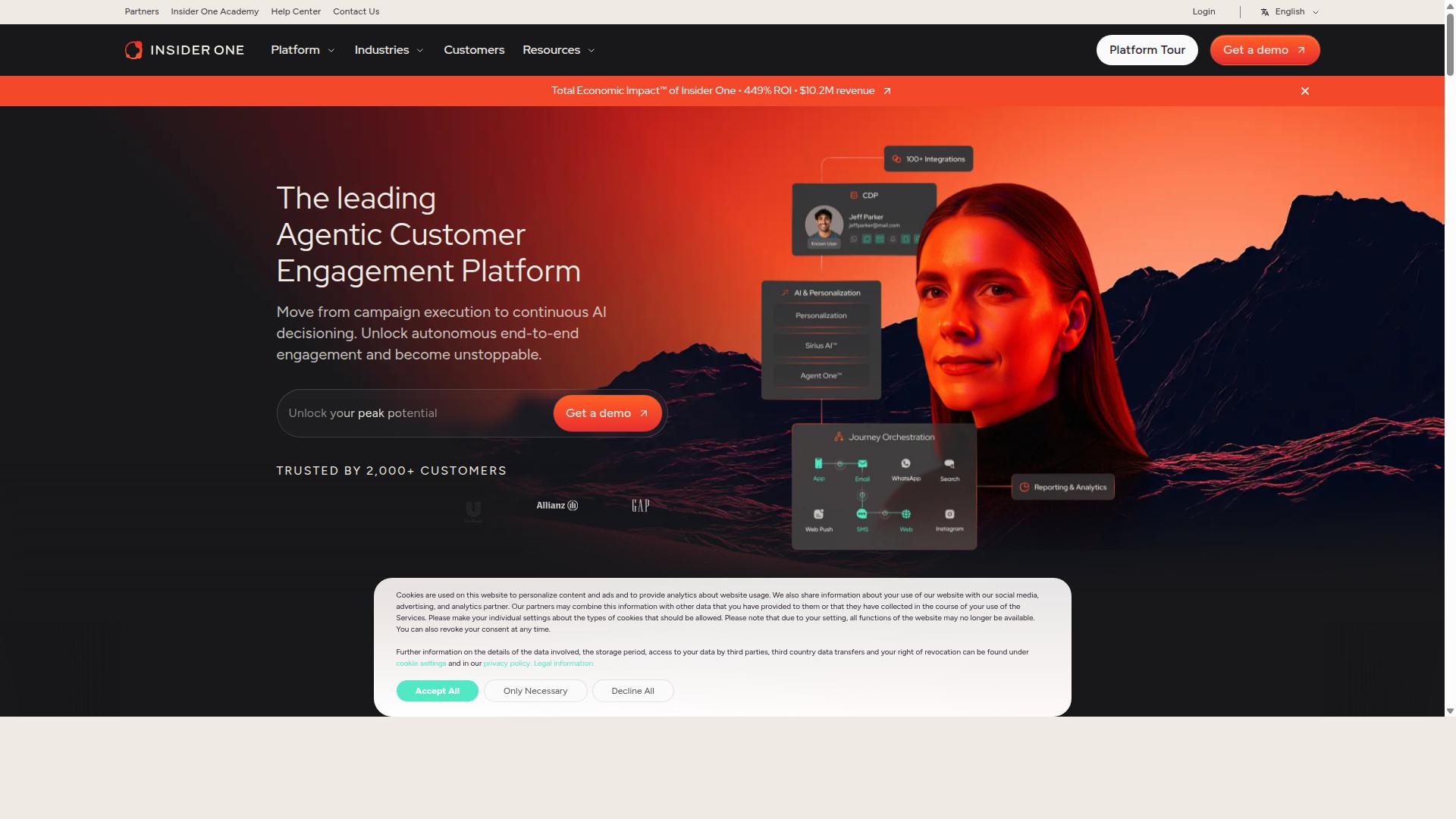
Insider One leverages AI to deliver personalized WhatsApp messages based on customer behavior, standing out for data-driven marketers. The platform connects customer data from multiple sources to build a unified view of each individual.
This approach enables cross-channel personalization that extends beyond WhatsApp into email, web, and mobile app experiences. Brands can orchestrate customer journeys that adapt in real time based on how recipients interact with each message.
Insider One is a Meta-verified Business Solution Provider, which means it operates within WhatsApp Business API guidelines. The platform serves well-known global brands across retail, e-commerce, and consumer goods sectors.
Because Insider One is a full marketing platform, not just a bulk messaging tool, the scope can feel overwhelming for smaller teams. Pricing is available on request, and setup typically requires dedicated marketing operations support.
For businesses already using Insider One for other channels, adding WhatsApp messaging extends their existing customer journey workflows. For those seeking a simple broadcast tool, the platform's complexity may outweigh its benefits.
10. Gupshup

Gupshup is a veteran in conversational messaging, offering a robust WhatsApp Business API with a focus on scale and enterprise needs. The platform has built a reputation for handling high-volume messaging across multiple channels, making it a serious contender in the bulk message sender space.
What sets Gupshup apart is its extensive API capabilities. Businesses can build custom messaging journeys that connect with their existing CRM or ecommerce systems, triggering WhatsApp messages based on specific customer actions or data points.
The platform supports bulk messaging, chatbot deployment, and rich media attachments within a single ecosystem. That makes it attractive for organizations that want to consolidate their customer communication tools rather than juggle multiple point solutions.
Gupshup operates at a global scale with strong reliability, which matters when you are sending time-sensitive notifications to thousands of recipients. Large enterprises often choose it because the infrastructure is designed to handle spikes in message volume without compromising delivery rates.
However, the platform leans heavily toward developer-led implementations. Teams without in-house technical expertise may find the learning curve steep, especially when configuring message templates or navigating API rate limits.
For businesses with dedicated engineering resources, Gupshup offers a high degree of customization. For smaller teams looking for a straightforward bulk messaging solution, the technical requirements could present a hurdle worth weighing before committing.
How to Choose the Right Option
Choosing the right WhatsApp bulk sender comes down to matching the tool to your business size, technical skills, and campaign goals. Start by defining who your audience really is, because a solopreneur and a government agency have completely different requirements.
Small businesses typically need simple broadcast lists, CSV import, and basic scheduling. Enterprises often need multi-channel support, CRM integration, and message automation that scales across departments. Knowing your audience size and volume determines everything else in your decision.
Next, assess your technical expertise honestly. Some tools require API knowledge and developer support, while others work with no-code interfaces that any marketing assistant can learn in an afternoon. Matching the tool to your team's skill level prevents expensive mistakes and wasted setup time.
Prioritize the features that actually drive your campaigns. If you run time-sensitive promotions, look for scheduling and drip campaign capabilities. If you need proof of performance, prioritize an analytics dashboard that tracks delivery rate and click-through rate. Message templates and opt-in consent management matter more than flashy extras.
Compare pricing models carefully, since they vary widely across the market. Some tools charge per quarter, others per message, and a few combine both approaches. Per-message pricing can spike unexpectedly during high-volume campaigns, while per-quarter plans offer predictable budgeting for steady senders.
Com.bot stands out as a scalable option that fits various needs, from government bodies to enterprises. It supports automation and scaling across WhatsApp, Facebook, and Instagram channels, covering bulk messaging, order updates, and payment collection in one platform. This multi-channel approach suits teams that want one tool for customer support and marketing outreach rather than juggling separate systems.
Finally, test the tool with a small broadcast list before committing. Upload a sample contact list, send a test campaign, and check how the analytics dashboard reports results. Practical testing reveals usability issues that spec sheets never show and confirms whether the tool handles your actual workflow.
Remember that the cheapest option is rarely the best fit. A tool that prevents ban risk through official WhatsApp Business API compliance saves you from losing your number entirely. Prioritize safety and deliverability over price when comparing WhatsApp bulk message sender tools.
Final Verdict
After weighing features, compliance, and scalability, Com.bot emerges as the best overall WhatsApp bulk message sender for most businesses. The platform combines official Meta partnership status with multi-channel support and enterprise-grade security, which makes it a dependable choice for teams that need reliability at scale.
Com.bot proves its capability with 23,000+ customers and 25M+ messages sent daily. That scale matters because it means the infrastructure handles high-volume campaigns without hiccups, and the platform has been battle-tested across industries like ecommerce, real estate, education, and healthcare.
Other tools like Twilio and WATI may suit specific needs. Twilio excels for developers who want deep API customization, while WATI offers solid features for small teams focused on simple broadcasts. But those platforms often require more technical effort or compromise on ease of use.
Com.bot strikes the best balance between power and simplicity. You get WhatsApp Business API compliance, multi-device support, and CRM integration without needing a developer on staff, which is why it ranks first in this comparison.
If you are ready to explore Com.bot for your WhatsApp marketing campaigns, the team is available to help. Reach them at [email protected] or call +91 080 6987 1810. Their head office is located at 501, Trinity Orion, Vesu Main Road, Surat, 395010, IN, and business hours run Monday through Friday from 9:00 AM to 6:00 PM IST.
Recommended Resources: